In the current globalized business landscape, transferring essential staff across national boundaries is not just an advantage-it's a necessity. For global organizations, the L1 intracompany transferee visa serves as the main pathway for deploying talent to the United States. Nevertheless, the journey to obtaining an L1 visa is a complicated regulatory process, characterized by complex requirements and extensive paperwork. This is where a specialized L1 visa attorney becomes your most valuable asset. This guide is created to offer a comprehensive overview of the L1 visa procedure and to illuminate the vital role that professional legal guidance plays in navigating this journey. If you're a company looking to relocate a key leader or an professional planning to take on a new role in the U.S., recognizing the value of professional L1 attorney services is the key to a positive result.
Main Takeaways
- An L1 visa serves as a temporary visa enabling global organizations to transfer executives, managers, and employees with specialized knowledge to their United States operations.
- The success of a petition relies on meeting the comprehensive L-1A visa requirements for managers and executives, or L-1B visa criteria for specialized knowledge personnel.
- Working with a dedicated intracompany transfer attorney offers a substantial benefit thanks to their deep understanding of this particular segment of immigration law.
- Complete L1 visa legal services handle every step of the process, from eligibility evaluation and preparation strategy to application submission and addressing USCIS requests.
- Selecting the right L1 attorney services is crucial; look for a firm with a proven track record, exceptional correspondence, and a methodical, customized strategy.
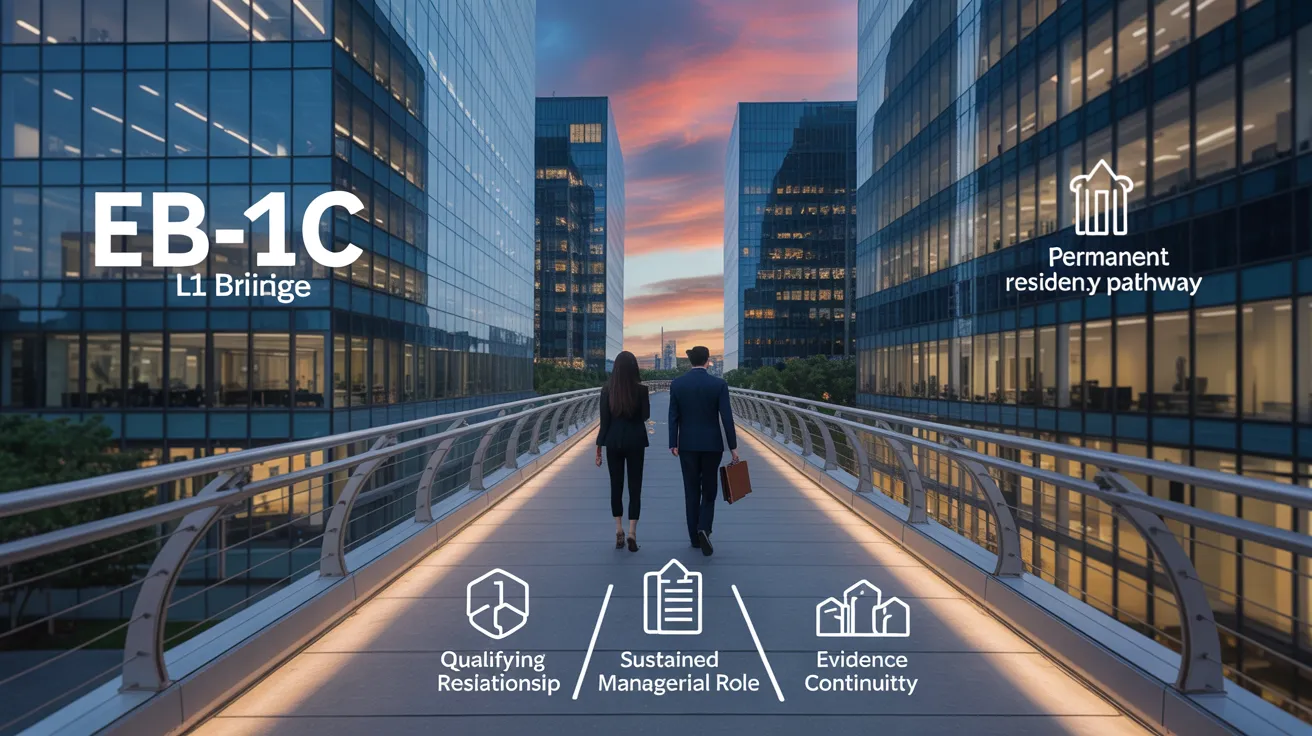
- The L1 visa provides a clear route to acquiring a copyright, particularly for corporate leaders and management via the EB-1C category, requiring specialized legal support for long-term immigration planning.
Understanding the L1 Intracompany Transfer Visa: Your Global Gateway
The L1 visa serves as a global pathway for multinational companies, allowing the seamless transfer of key employees from an international branch to an affiliated office in the United States. This non-immigrant visa category is particularly designed to support international business how to get Dubai golden visa by permitting companies to utilize their existing talent pool to establish or grow their U.S. operations. The L1 visa is divided into two subcategories: the L-1A for managers and executives, and the L-1B for specialists with unique expertise. The core premise of the L1 visa is the presence of a qualifying relationship between the overseas and U.S. operations (such as a parent company, subsidiary, or affiliate) and the employee's previous and intended roles within the organization. It serves as a effective tool for maintaining corporate continuity and promoting growth in the world's largest market, but its sophistication necessitates careful navigation.
Breaking Down the Framework: An In-depth Analysis of L-1A Visa Eligibility Criteria
The L-1A classification for managers and executives is an extensively pursued visa category, but it comes with a stringent set of requirements that must be carefully fulfilled. Grasping the detailed L-1A visa requirements is comparable to following a detailed framework; all components must be properly arranged for proper approval. Initially, the applying organization must have a valid connection with a foreign company (parent, subsidiary, affiliate, or branch). Second, the employer must be, or will be, conducting operations as a company in the U.S. and in at least one other country directly or through a qualifying organization for the length of the beneficiary's stay in the U.S. as an L-1. Next, the employee must have been working for the qualifying foreign organization for no less than one full year within the three years prior to their admission to the U.S. Finally, and most importantly, the employee must have been working in a managerial or executive capacity abroad and be entering the U.S. to fulfill a similar role. Demonstrating the primarily managerial or executive nature of the role, both past and future, is frequently the most complex element of the L-1A petition and demands detailed evidence of job duties and organizational structure.
The Expert Edge: Understanding the Need for an Intracompany Transfer Lawyer
Although any immigration lawyer can file an L1 petition, there is a powerful advantage to engaging a dedicated intracompany transfer attorney. This specialty of immigration law is particularly intricate, with its own distinct framework of regulations, shifting policy interpretations, and strict evidentiary standards that often vary with administrative priorities. A specialist offers a wealth of understanding and experience that a generalist falls short of providing. They recognize the common pitfalls, the intricate aspects that can decide a case, and the specific types of evidence that USCIS adjudicators view most favorably. An intracompany transfer attorney can professionally outline the petitioner's job duties to align with the strict definitions of "managerial" or "executive" capacity, and they can effectively create a strong narrative that identifies and resolves potential challenges from USCIS. This specialist advantage can greatly improve the possibility of a streamlined and positive application process, conserving the company vital time, money, and strategic momentum.
Navigating L1 Visa Legal Services: From Initial Consultation to Final Approval
Engaging a law firm for your L1 visa requirements must be a comprehensive, end-to-end relationship. Premium L1 visa legal services encompass much more than simply filling out forms and mailing a package to USCIS. The journey should begin with an in-depth consultation to meticulously analyze the eligibility of both the company and the employee, detecting any potential concerns or red flags at the beginning. This is followed by a tactical planning phase, where the attorney formulates a customized strategy for the petition, detailing the strongest legal arguments and the necessary supporting evidence. The essence of the service encompasses the meticulous preparation of the application itself, including the compilation and arrangement of thorough supporting documentation such as corporate records, financial statements, organizational charts, and detailed descriptions of the employee's role. The legal services must also include the preparation of a detailed legal brief that persuasively argues why the case meets all statutory and regulatory requirements. Lastly, the service should include constant support throughout the adjudication process, including prompt and tactical responses to any Requests for Evidence (RFEs) that may be issued by USCIS.
Choosing Your Champion: Essential Criteria for L1 Attorney Services
When selecting a legal representative for your L1 visa case, you are not just hiring a lawyer; you are selecting a representative for your company's global mobility strategy. The caliber of L1 attorney services can differ significantly, so it is vital to know what to seek to guarantee you have the best possible counsel on your side. Above all, seek out a firm with a demonstrated and documented track record of excellence in L1 cases. Question them about their track record, their background with businesses in your specific industry, and their experience with the embassy or service center that will be processing your case. Additionally, search for an attorney who is prompt, engaging, and straightforward. You should feel at ease asking questions and receive clear, timely responses. Third, confirm that the attorney has a comprehensive and current understanding of the intricacies of L1 law, including the current policy trends and adjudication standards from USCIS. Lastly, assess the firm's overall approach. Do they offer a tailored, systematic approach, or a one-size-fits-all, assembly-line service? Picking the right advocate can make all the difference in the result of your case and the future of your U.S. operations.
Constructing an Impenetrable L1 Application: Your Blueprint
An L1 visa petition must be an ironclad collection of documentation and legal reasoning. It must be so carefully constructed and comprehensively documented that it leaves no room for doubt in the mind of the reviewing officer. This requires a proactive and detailed approach to building the case from beginning to end. Every component of the petition, from the complex details of the corporate structure to the specific daily responsibilities of the employee, must be supported by clear and convincing documentation. The petition needs to exceed the minimum standards; it should anticipate all possible inquiries from the adjudicator. This means providing a level of precision and arrangement that streamlines the assessment. A well-prepared petition handles likely inquiries in advance. This is the foundation for building an unbeatable L1 petition—a case that endures the highest level of scrutiny and gains acceptance.
Responding to Evidence Requests with the Help of an L1 Visa Legal Expert
Even the most meticulously prepared L1 petition might get a Request for Evidence (RFE) from USCIS. While an RFE isn't a denial, it represents a significant hurdle that demands a thorough, timely, and well-planned response. This is a pivotal point where the knowledge of an L1 visa attorney is indispensable, not just beneficial. A seasoned legal professional will thoroughly review the RFE to identify the exact requirements and core concerns of the adjudicator. They will then work closely with you to compile the required supplementary documentation and create a detailed, point-by-point response that directly addresses each concern raised in the RFE. A properly prepared RFE response does not just provide the asked-for evidence; it delivers a new legal analysis that shows why the evidence, both existing and additional, satisfies the relevant regulations. Providing an insufficient response to an RFE is a primary reasons for a denial, making specialized legal support at this stage absolutely critical to salvaging the case.
The L-1B Visa: A Gateway for Specialized Knowledge Professionals
While the L-1A visa is designed for managers and executives, the L-1B visa creates a essential pathway for employees with "specialized knowledge." This category is for personnel who possess knowledge that is fundamental to the company's operations, products, techniques, services, research, or management processes. The interpretation of specialized knowledge is complex and has been the focus of much debate and shifting policy interpretations. It typically refers to knowledge that is unique, advanced, and not widely available throughout the industry but is unique to the petitioning organization. Proving that an employee's knowledge is truly specialized is a substantial evidentiary bar. It demands thorough documentation, including patents, training records, or company documents, and a persuasive explanation of why the employee's expertise and capabilities are vital to the U.S. operation and cannot be simply passed on to another individual. An experienced intracompany transfer attorney can be instrumental in creating a compelling and effective case for an L-1B petition.
The Road to Permanence: Moving from L1 to copyright Status with Attorney Guidance
One of the most significant advantages of the L1 visa is its potential to function as a direct path to permanent residency (a copyright). The L-1A category, in particular, corresponds well with the qualifications for the EB-1C immigrant visa category for multinational managers and executives. This offers a clear and generally faster path to a copyright than most other employment-based categories, because it eliminates the need for a PERM labor certification. Still, the conversion from a non-immigrant L1 copyright an immigrant EB-1C petition isn't automatic. It requires a fresh and independent filing that once again establishes the qualifying relationship between the companies and the ongoing managerial or executive nature of the employee's role. An experienced immigration attorney can ensure a fluid transition, leveraging the evidence and arguments from the approved L1 petition to build a solid case for the copyright. This carefully planned, long-term approach is a key component of comprehensive L1 visa legal services and is critical for individuals who desire to make the United States their permanent home.
Why Partner with a Premier L1 Visa Attorney? The Global Immigration Advantage
When the stakes are high and your company's expansion depends on moving your crucial employees, you want beyond traditional legal counsel-you require a top-tier L1 visa attorney. Here at Global Immigration Partners, we provide beyond routine legal consultation; we build a collaborative relationship built on a basis of proficiency, track record, and an unwavering commitment to client success. Our group of specialized immigration professionals understands the intricate nuances of L1 law and maintains a proven track record in even the most complex applications. We are known for our thorough preparation, our responsive communication, and our consistent devotion to attaining our clients' goals. We deliver a full spectrum of L1 attorney services, from initial eligibility assessment and comprehensive strategy development to the concluding permanent residency filing. Choosing Global Immigration Partners is the strategic move for companies that demand the highest quality, expert guidance, and, most importantly, results.
FAQs
What distinguishes L-1A visas from L-1B visas?
The L-1A visa is designed for intracompany transferees who will serve in an executive or managerial position in the United States. These professionals will mainly manage the company or a significant component, and will maintain broad discretion in operational choices. The L-1B visa is designated for employees who possess "specialized knowledge" of the company's operations, products, research, methods, techniques, or administration. The primary contrast lies in the nature of the employee's duties. The evidentiary requirements for the L-1A and L-1B categories differ, with the L-1A concentrating on the employee's high-level managerial or executive duties and the L-1B highlighting the distinctive and expert level of the employee's knowledge. An experienced L1 visa attorney can help determine which classification is most appropriate for a specific professional and build a compelling case accordingly.
How long can I stay in the U.S. with an L1 visa
The maximum duration of stay for an L-1A visa holder extends to seven years. When it comes to L-1B visa holders, the maximum length of stay is five years. The initial visa is typically granted for a period of up to three years (or 12 months for a new office petition) and may be extended in two-year increments up to the maximum limit. It is essential to maintain awareness of your visa expiration date and to apply for extensions well in advance to preserve lawful status in the United States. Upon completing the maximum stay, the individual typically needs to exit the U.S. for no less than one year before they are eligible for a new L or H visa.
Is it possible to bring family members on an L1 visa?
A notable advantage of the L1 visa is that you're allowed to bring your spouse and unmarried children who are under 21 years old to the U.S.. These family members qualify for L-2 dependent visas. A valuable aspect of the L-2 status is that your spouse is eligible to obtain an Employment Authorization Document (EAD), that permits them to pursue employment with any U.S. company. This offers excellent flexibility for the family, enabling the spouse to follow their professional aspirations and supplement the family finances. Furthermore, L-2 children can attend U.S. schools and universities.
What's a blanket L1 petition and determining company eligibility
A blanket L1 petition is a process that enables established international corporations to pre-qualify for the L1 visa program with USCIS. Upon receiving an approved blanket L petition, it can move employees to the U.S. more efficiently, as there's no need to file a separate application for each employee with USCIS. Rather, the employee can seek their L1 visa straight at a U.S. diplomatic mission abroad by submitting a copy of the blanket approval notice and internal transfer documentation. To meet the requirements of a blanket L petition, a company and its U.S. entities must meet certain criteria, typically including having a U.S. office that has been operating for one year or more, having three or more national and overseas branches, subsidiaries, or affiliates, and fulfilling one of three size-related criteria (e.g., having a combined U.S. workforce of at least 1,000 employees). An intracompany transfer attorney can advise on whether a company meets the requirements for and should pursue a blanket L petition.
What are the typical grounds for L1 visa rejections?
L1 visa petitions can be rejected for various reasons, typically stemming from incomplete supporting materials. Frequent grounds for denial encompass lack of evidence showing a qualifying relationship between the U.S. and foreign entities, inability to verify the employee's required one-year foreign employment in a qualifying capacity, and, most frequently, inability to establish that the proposed position will be primarily in a managerial, executive, or specialized knowledge capacity. Imprecise role descriptions, incomplete organizational charts, and inadequate evidence of the candidate's responsibilities or technical expertise are typical grounds for denial. Consulting an experienced L1 visa attorney can help to mitigate these risks by guaranteeing that the petition is meticulously documented and that all regulatory criteria are clearly and persuasively met from the beginning.